Home>Running Culture>Culture>Creating Training Content That Actually Looks Good on Social Media
Culture
Creating Training Content That Actually Looks Good on Social Media
Published: September 27, 2026
Tired of flat running photos on Instagram? Learn how recreational runners can create polished training visuals without any design experience.
You run five days a week. You track every mile. You hit a new personal best or complete a grueling long run and want to share the moment, but when you post the photo it gets twelve likes and a couple of fire emojis from your mom. Meanwhile, the fitness accounts you follow are pulling thousands of engagements with content that looks clean, polished, and somehow effortless. The gap between what you experience on the road and what you manage to show online is real, and it has almost nothing to do with your running ability.
Key Takeaways:
– Training photos snapped mid-run or post-workout often lack the visual structure that stops people mid-scroll
– Purpose-built graphic tools let runners create polished race recaps and milestone announcements without any design background
– Cluttered backgrounds from indoor training spaces are one of the biggest visual killers for solo runner content
– Consistent colors, fonts, and framing help build a recognizable presence across posts
– Great-looking content is less about expensive gear and more about the right tools and a few repeatable habits
Why Your Training Shots Look Forgettable
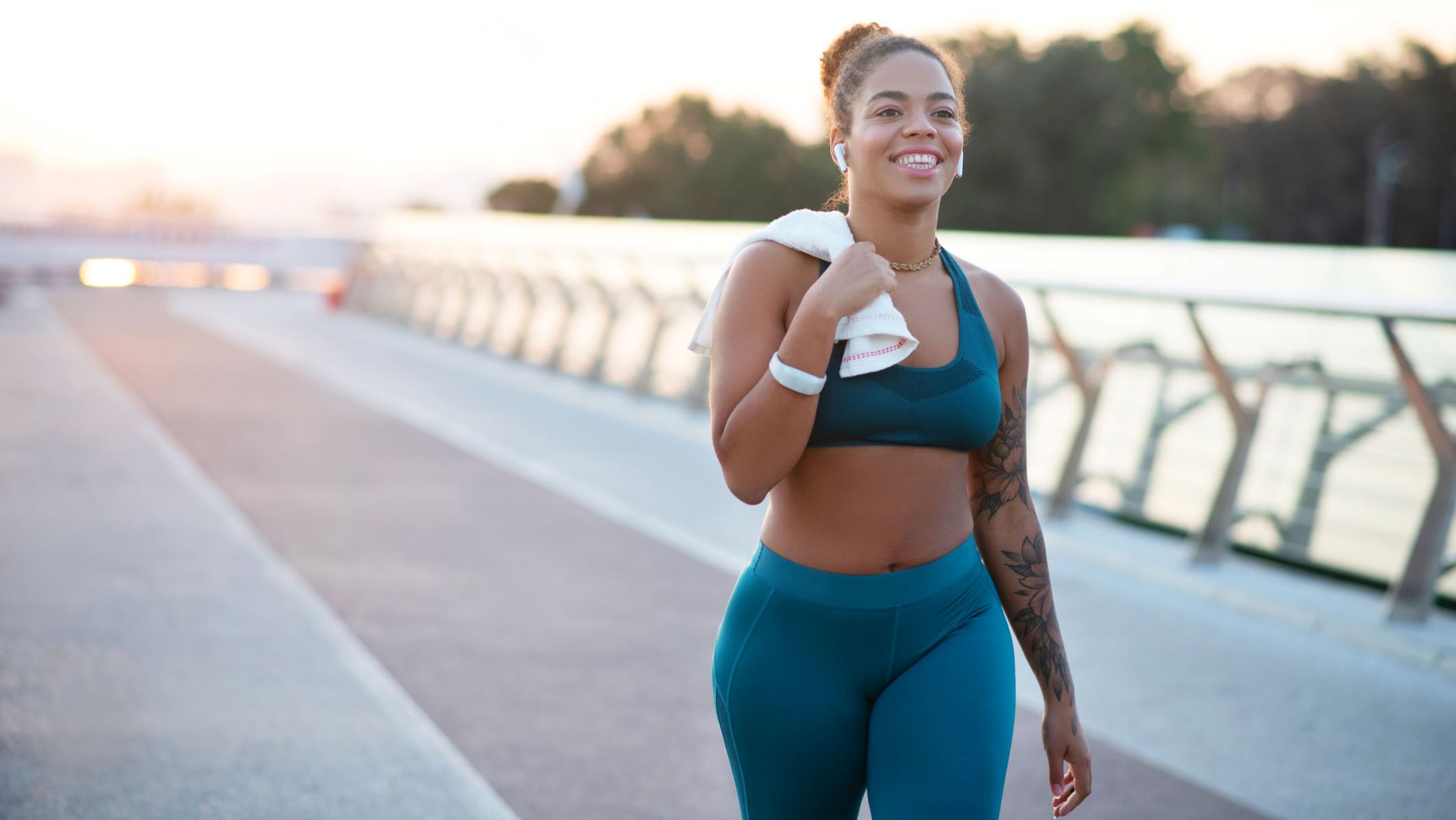
The problem starts before you even open the camera app. Most recreational runners grab their phone at the end of a run, still sweaty, out of breath, standing wherever they happen to be. The lighting is whatever the sky or the gym decides to offer. The background is a parked car, a smudged wall, or a pile of gym bags. The framing is whatever fits in the front camera’s field of view.
None of this is a criticism. It is just the reality of training on a schedule while holding down a life outside of running.
The issue is that Instagram is a visual-first platform where the first fraction of a second determines whether someone stops scrolling or keeps moving. A photo that communicates effort does not automatically communicate visual quality. Sweat and authenticity matter, but they work better when wrapped in a composition that holds attention.
The runners and fitness creators you admire are not necessarily better photographers. Most of them have simply learned to add a layer of intentionality after the shot is taken, whether through editing, graphic overlays, or choosing a consistent aesthetic that makes each post feel like part of a series rather than a one-off snapshot.
What Fitness Influencers Do That Casual Runners Skip
There are a few specific habits that separate polished content from content that disappears into the feed:
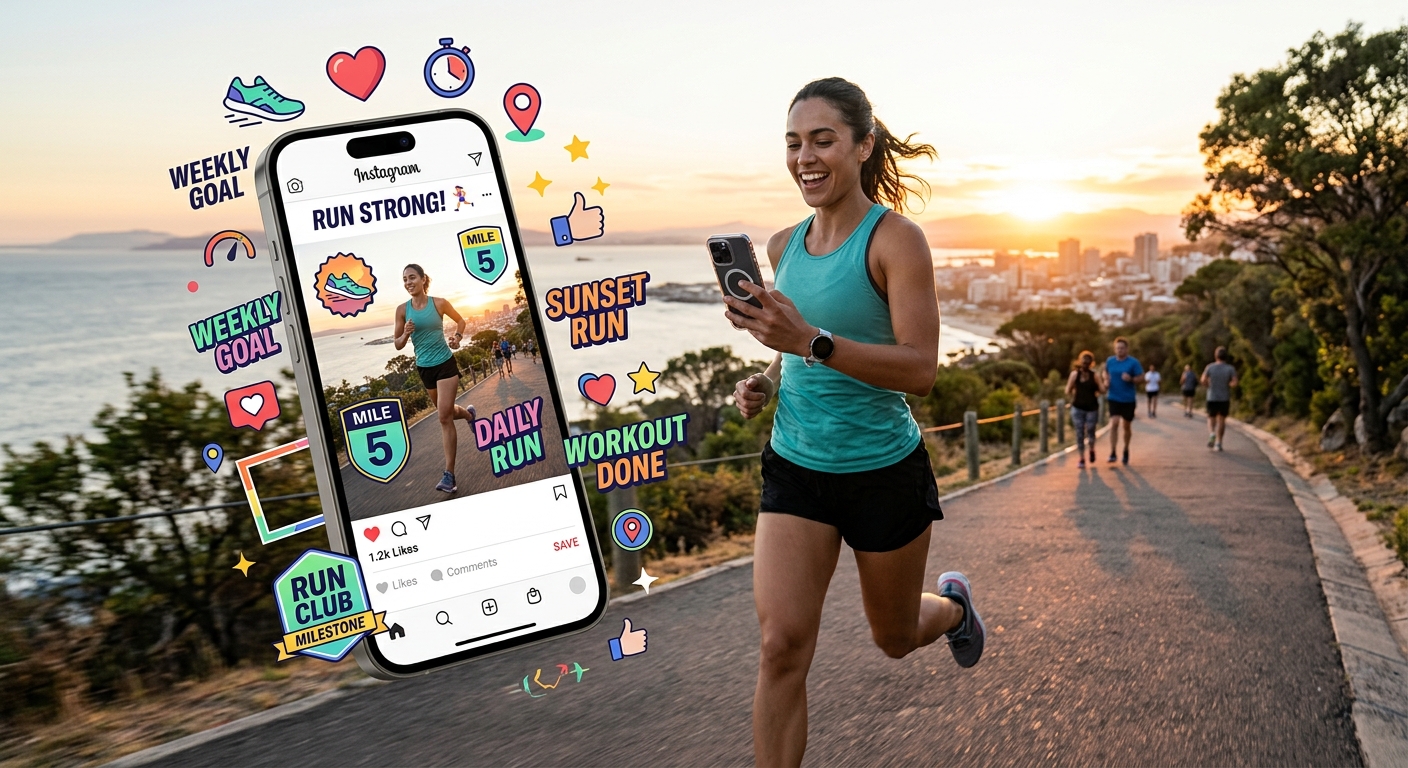
- They add text overlays, race stats, or pace information so the image tells a story without requiring the caption to explain it
- They use consistent brand colors and font choices so each post is recognizable even without seeing the account name
- They edit or replace backgrounds so the subject of the image is the runner, not the surroundings
- They treat milestone moments like race completions and new PRs as designed graphics, not just filtered selfies
- They batch their content creation so every post goes through at least a minimal production step
The good news is that none of these require a graphic design background, a photographer friend, or expensive software.
Turning Race Day and Milestone Moments Into Real Graphics
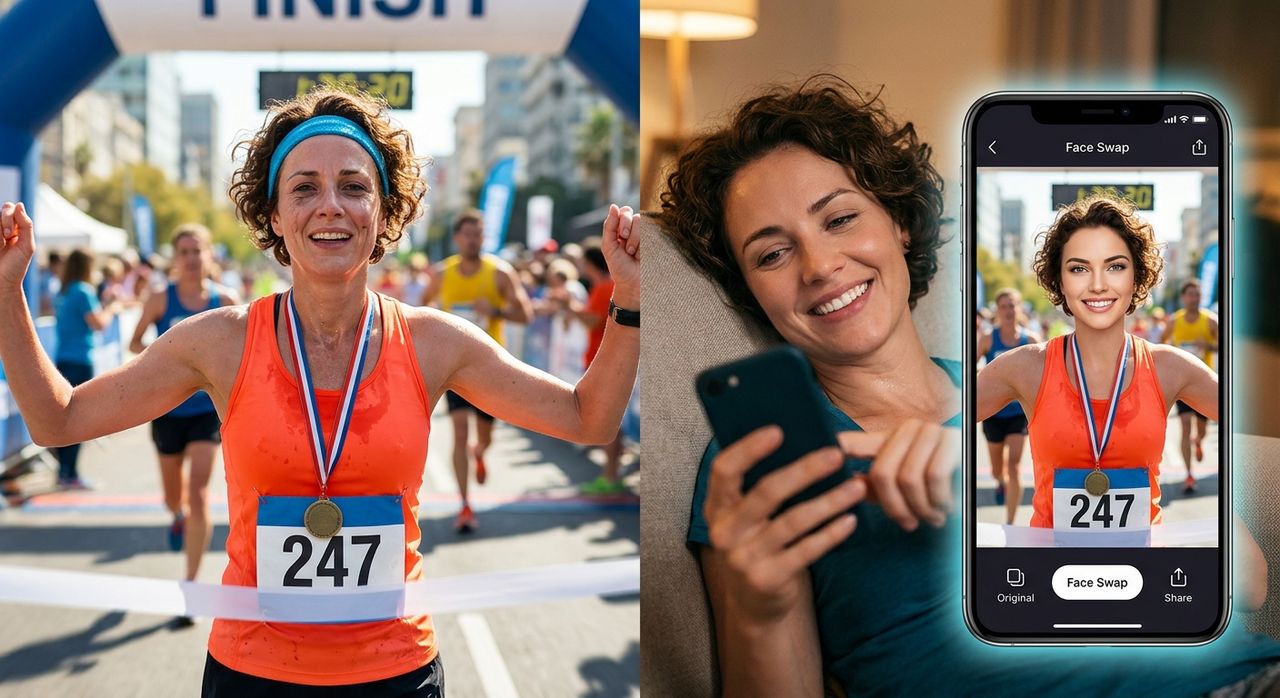
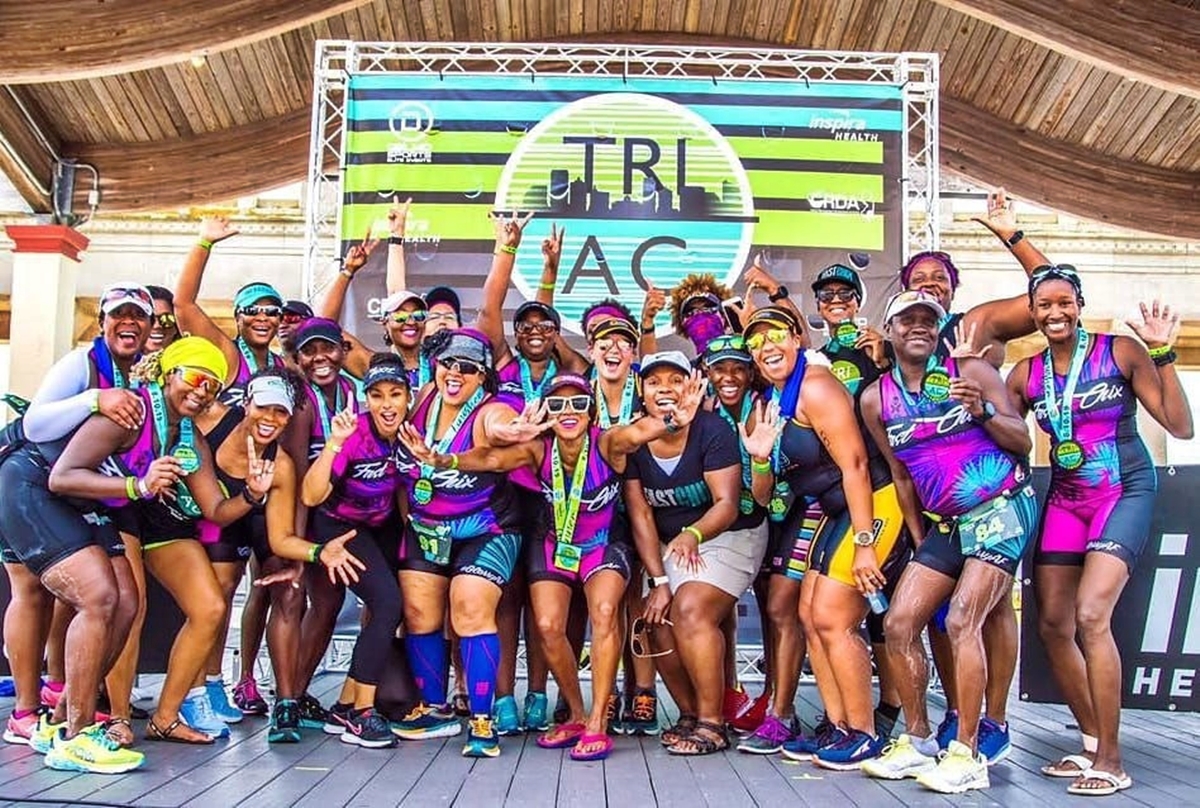
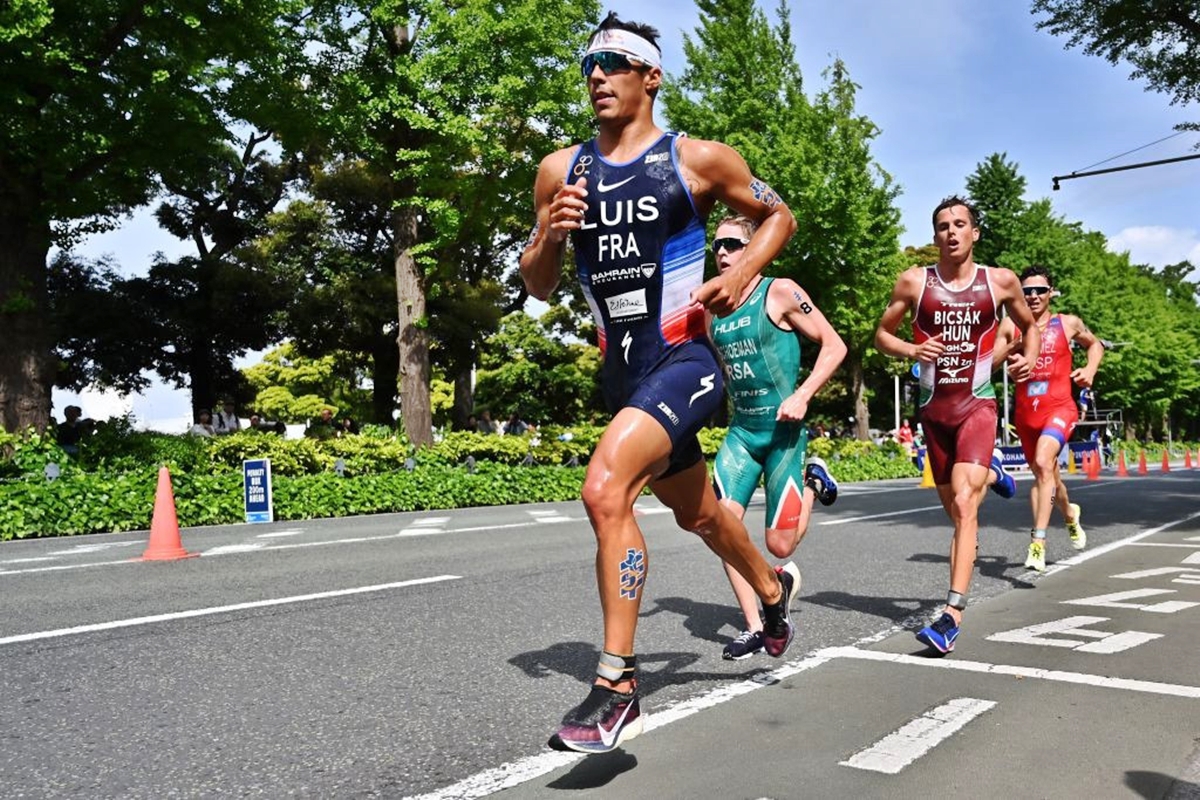
The biggest missed opportunity for recreational runners is the post-race moment. You just ran a 5K, a half marathon, or maybe your first full marathon. That is a meaningful achievement. But a blurry finish-line selfie with a medal dangling at the bottom of frame does not do it justice.
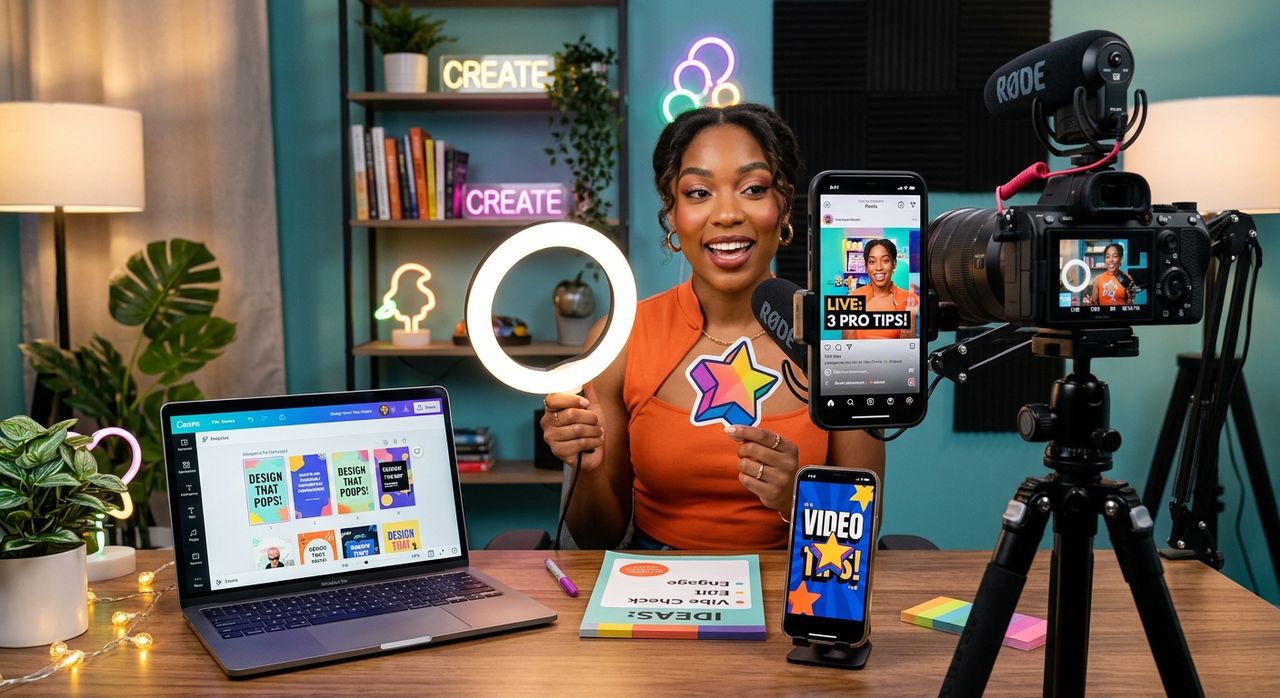
This is exactly the use case that a social post generator was built for. You bring your photo, add your race stats, choose a layout that fits your aesthetic, and end up with something that looks designed rather than assembled on a phone screen while standing in the finisher’s chute. The same applies to weekly mileage milestones, training streaks, and anniversary posts celebrating a year since you started running.
The workflow is straightforward:
- Select a template that matches the tone of your post, whether celebratory, motivational, or informative
- Upload your best photo from the event or training session
- Add the relevant stats: finish time, distance, elevation gain, or whatever number means the most to you
- Adjust the color palette to match your personal brand, or pick whatever looks clean
- Export and post directly to Instagram, Stories, or whatever platform you use most
The result does not look generated. It looks like you took five minutes to care about how you present your achievements. That small investment pays off both in how the post performs and in how you feel about sharing it.
The Indoor Training Problem No One Talks About Enough
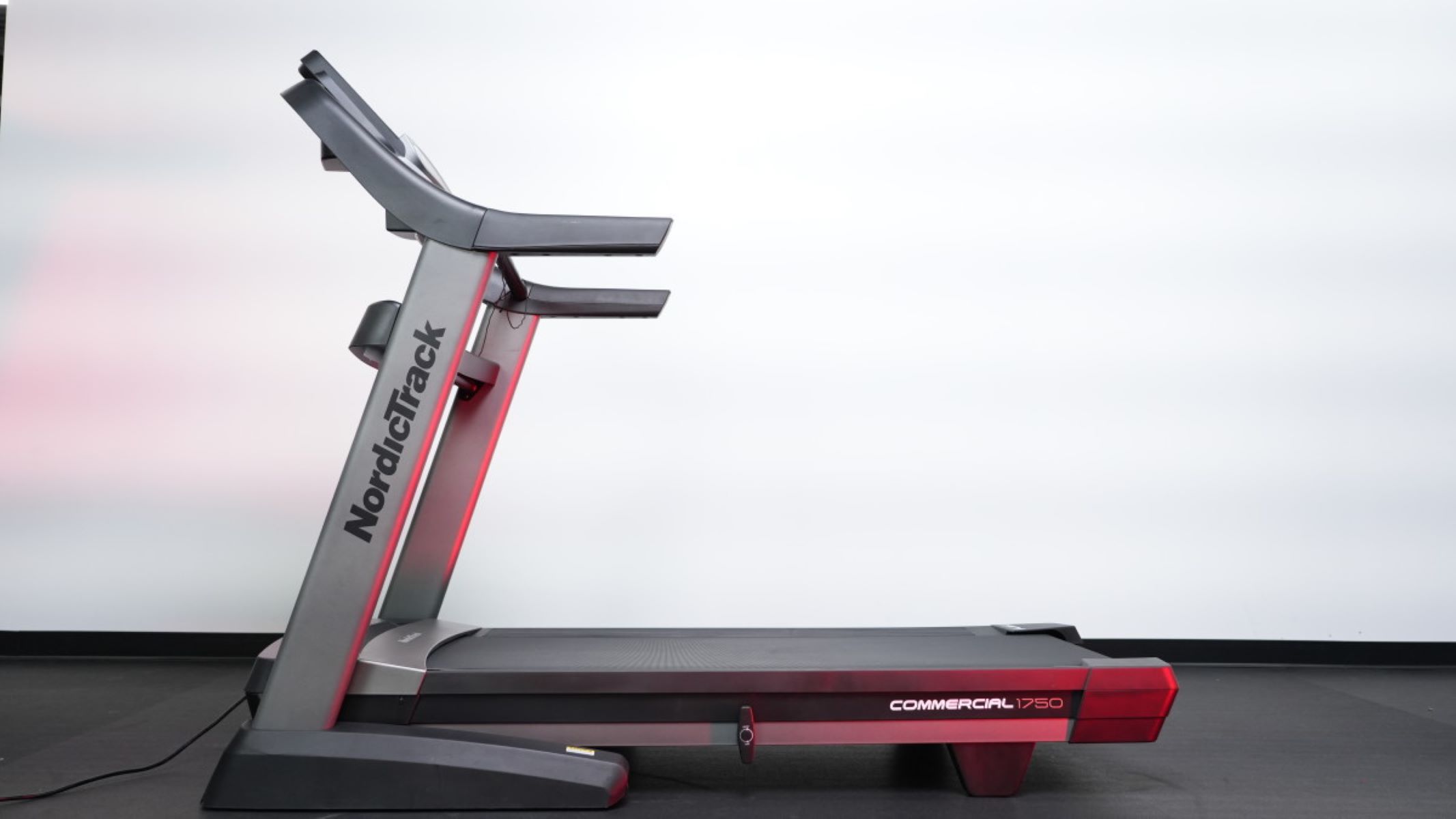
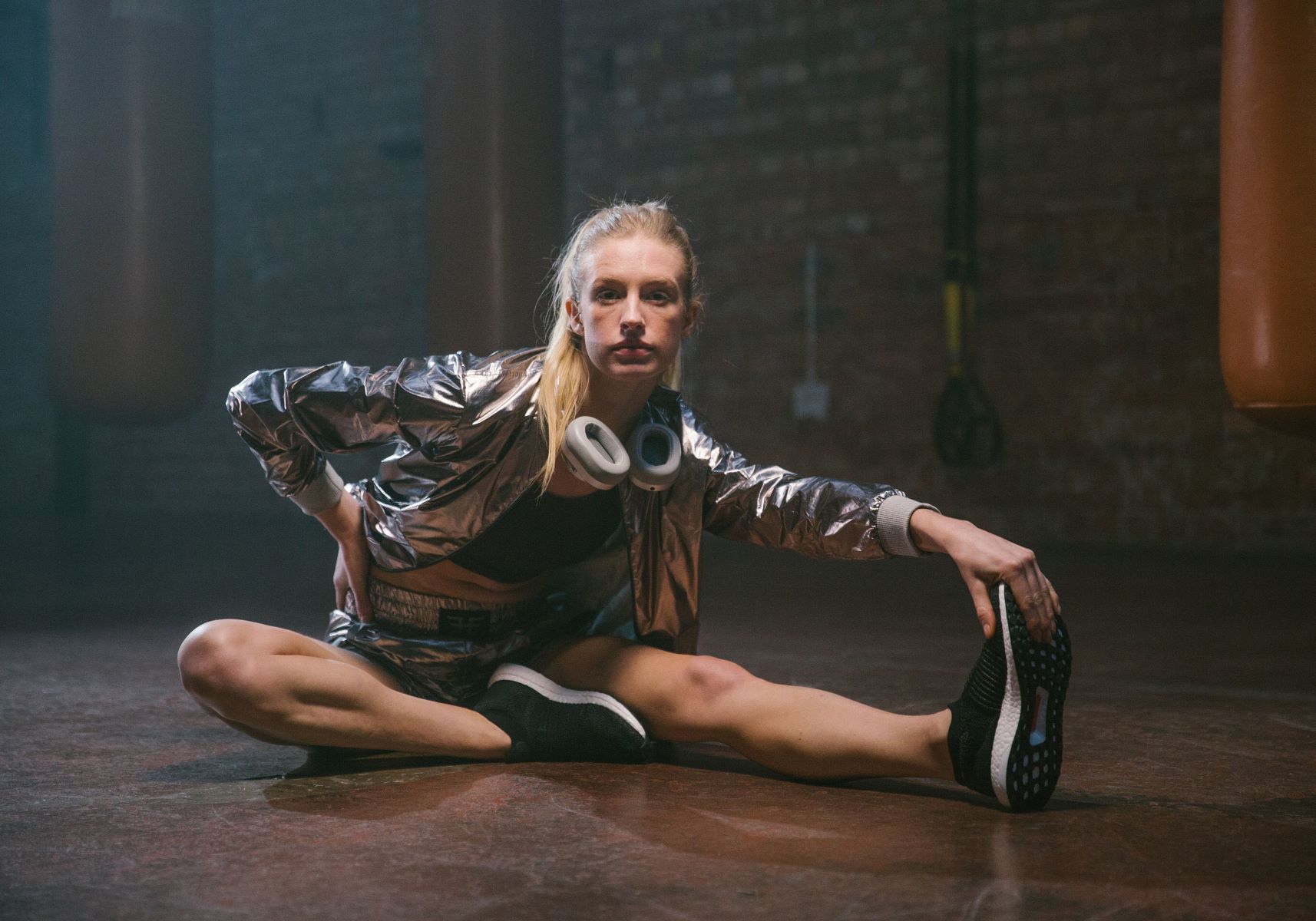
Outdoor training shots have their own challenges, but indoor content is a separate category of frustrating. Most solo runners who train at a gym or at home are working in spaces that were not designed to look good on camera. Apartment hallways with coat hooks and shoe racks. Gym floors with other people’s bags in the corner. Treadmill stations backed up against a painted cinder block wall.
You cannot move the wall. You cannot always control the environment. But you can remove it entirely.
A background remover handles this in seconds. Upload your indoor shot and the tool isolates your figure from everything behind you. Drop in a clean color, a gradient, or a location photo that makes more sense for your content. The indoor-clutter problem disappears, and you are left with an image that focuses entirely on you.
This is especially useful for strength training cross-training posts, treadmill milestone shots, and any time you want a consistent look across posts that were shot in completely different, messy locations. Indoor training does not have to look like it was shot indoors.
Building a Visual Identity That Grows With You
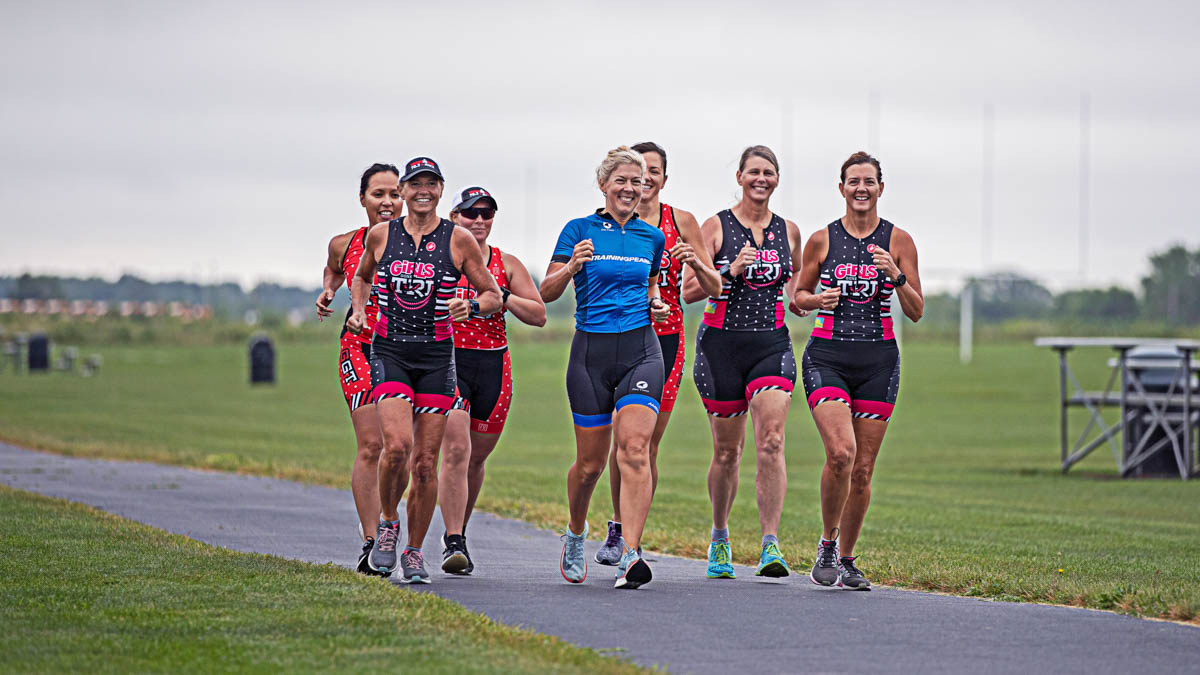
One underrated reason why some running accounts feel cohesive while others feel scattered is consistency. It is not about being rigid or posting the same format every time. It is about having a few repeatable elements that signal to your audience that this content comes from the same person.
That might mean always using the same two accent colors in your text overlays. It might mean always posting your long run recap in a specific graphic format. It might mean choosing a filter preset and sticking with it so your feed has a consistent temperature and tone.
These choices compound over time. What looks like a small detail in the first month becomes a recognizable signature after a year of consistent posting. The runners who build real audiences on Instagram are not necessarily the ones with the most miles logged. They are the ones who treat content creation as a skill that sits alongside their training, practiced regularly and refined as they go.
From the Finish Line to the Feed
Running gives you a genuine story to tell every single week. A new PR, a brutal long run, a comeback after injury, a cold morning when you showed up anyway. These are compelling moments. The visual presentation is just the packaging.
You do not need a design team or a DSLR to make that packaging look good. You need a few minutes after each run or race to give your content the same care you give your training plan. The right tools make that possible for anyone, regardless of design experience.
Start with one post. Pick the achievement that meant the most recently and give it the presentation it deserves. See how it feels to share something that actually looks as good as the effort behind it.
That is usually all it takes to change the habit permanently.